

A Complete Guide to Making Vegetable Miso
Introducing the first Black Butter Club Monograph

Funnily enough, this idea first lodged itself in my mind through a misremembering of two different Japanese koji preparations: miso and amazake.
My friend and mentor Haruko Uchishiba taught me how to make both many years ago. Somewhere along the way, I combined the idea behind her sweet-potato amazake with a sweet white miso, and accidentally made something distinctly stock-like, with the pleasant aromatic depth of slowly roasted vegetables alongside the familiar salty umami of miso.
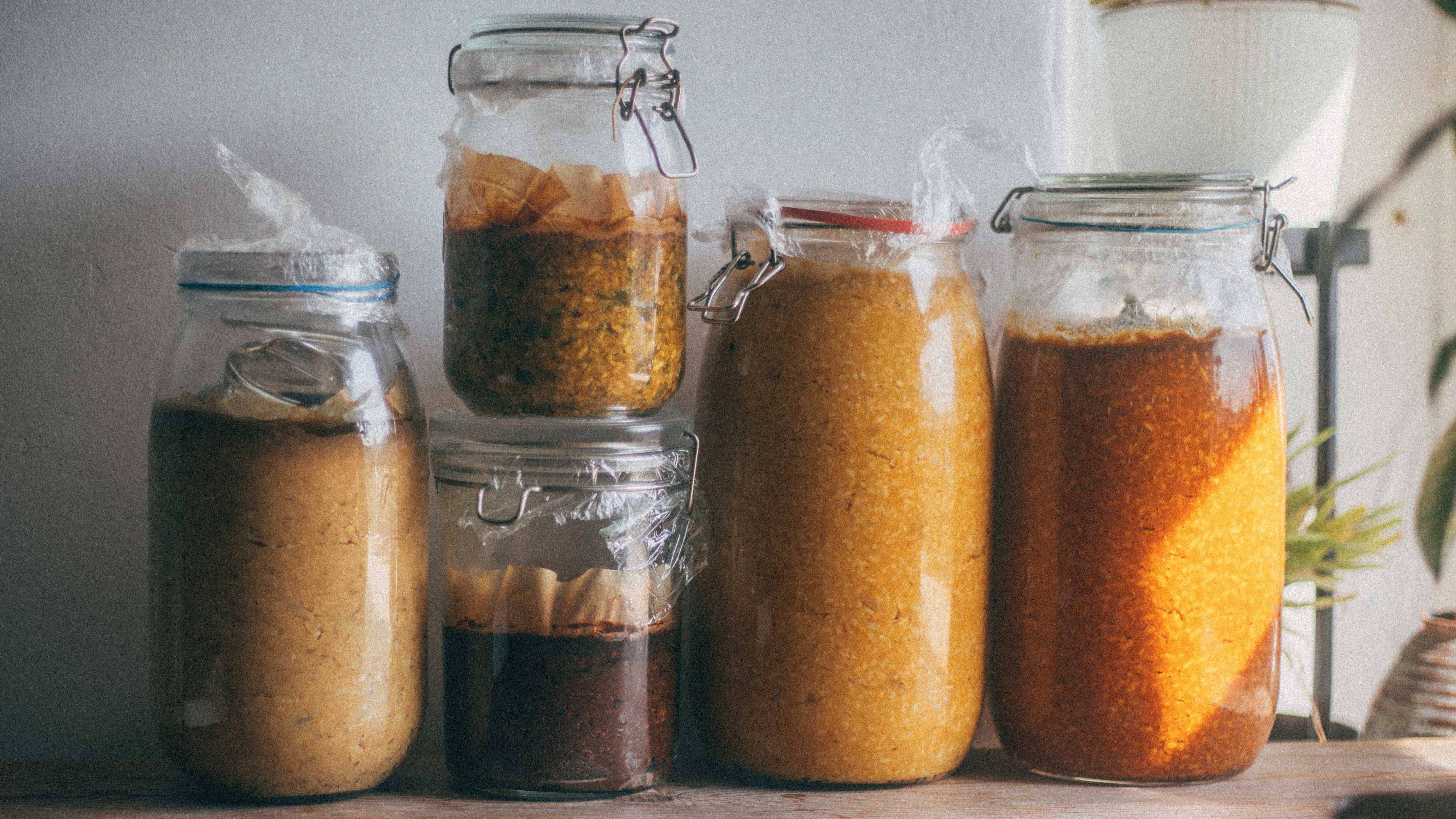
That accidental combination of two ideas sent me deep down a rabithole, and became the beginning of a much larger exploration.
I moved from soybeans to field beans, broad beans, stewing peas, butter beans and whatever else I could grow or get my hands on. More importantly, I began incorporating vegetables directly into the miso: trays of squash roasted until their edges turned dark; deeply caramelised and savoury onions, cooked slowly in a large pot; whole-roasted garlic softened into golden paste; and peppers blackened over cast iron, peeled, drained and mixed into barley-koji miso.
I had been exploring the technique for more than a year when I next met Haruko face-to-face at a Fermenters Guild event in London. My attempts to describe it through messages had largely failed, but once we had the opportunity to discuss it properly, Haruko quickly concluded that I had accidentally made it up. My assumption had been that this must already be a technique for a certain niche within miso making that I simply lacked the vocabulary to describe in order to locate the Japanese name for it. It turned out I was wrong.
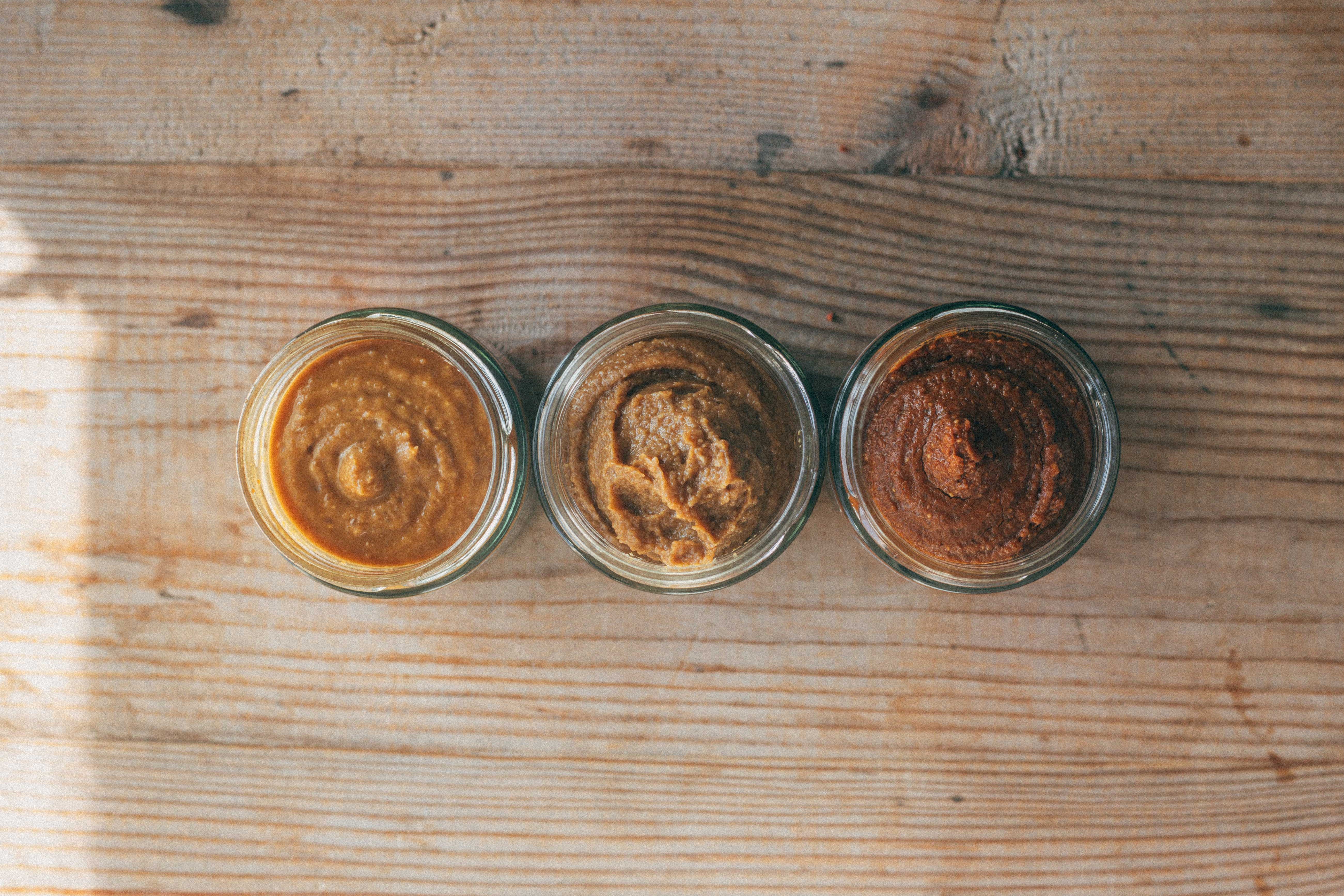
Now, I do not claim to have invented vegetable miso. Miso itself belongs to an extraordinary Japanese lineage of great depth and regional diversity; and Japanese makers have long worked with different pulses, grains, roots and vegetables. Pea miso, for example, is reported to have been made in parts of Nara since the Edo period. However, the step of roasting or cooking the vegetables first to build additional depth into the process, to me at least, feels distinctly British, and offers a lovely combination of cuisines. It also offers us a means to elevate our vegetable scraps to the culinary heights of miso, and turns miso into something akin to a fermented, koji stock (bringing together the backbone of both cuisines).
My own practice owes an enormous amount to Haruko and to the generations of makers who maintained koji knowledge and shared it around the world. What I have developed is a particular vegetable-led approach: a practical system for applying that knowledge to the pulses, vegetables and seasons available to us.
That system has now become the first Black Butter Club Monograph*.
* A monograph is a detailed study of a single specialist subject, usually published as a standalone work.
Why vegetable miso needs its own method
A vegetable cannot simply be stirred into an established miso recipe as though it were an additional flavouring.
With it comes water, sugar, acidity, fibre and its own population of microorganisms; ingredients such as garlic, mustard, chilli and horseradish also contain compounds capable of suppressing microbial growth. Some vegetables work beautifully from a fermentation perspective but produce unexpected bitterness as they age. Roasting concentrates these flavours, although it also changes the moisture, sugar and behaviour of the finished paste.
A successful vegetable miso must be designed around the relationship between every element, or else risk failure. Pulses, koji, salt, moisture, temperature and time have been finely tuned over generations of makers (both industrial and domestic) in Japan, and once the relationships between each part are understood, the technique opens into an extraordinary range of possibilities.
And this monograph is my attempt to set that entire system down.
What is included
The main document contains more than 25,000 words covering the complete process of designing, making, ageing, tasting and using vegetable miso.
Inside, you will find:
The five variables that govern every batch
A master vegetable-miso formula and salt-calculation method
Comparisons of soybeans, fava and field beans, stewing peas, split peas, chickpeas, butter beans and lentils
Guidance on fresh and dried koji, including rice, barley and other grain substrates
Methods for measuring and controlling moisture
Pressure-steaming guidance for producing completely tender pulses without waterlogging them
Detailed roasting and concentration schedules for vegetables and aromatics
Young, house and long-aged maturation programmes
Guidance on encouraging and harvesting miso-damari or tamari
The wasabi and horseradish surface-protection method Haruko taught me
Packing, weighting, turning, tasting, troubleshooting and record keeping
Worked formulations ranging from pale roast garlic miso to burned-pepper barley miso
Traditional uses, recipes and professional kitchen-development techniques
A method for ice-clarifying mature miso into a clear cooking liquid
Storage, hygiene, allergens and histamine
The history and culture of miso and koji in Japan
Technical notes, sources and terminology
The main monograph is accompanied by a complete collection of supporting materials:
A short Start Here guide
A photographic guide to ingredients, textures and important stages of the process
A directory of koji makers, specialist suppliers, equipment and further reading
A detailed batch record
A one-page salt-calculation card
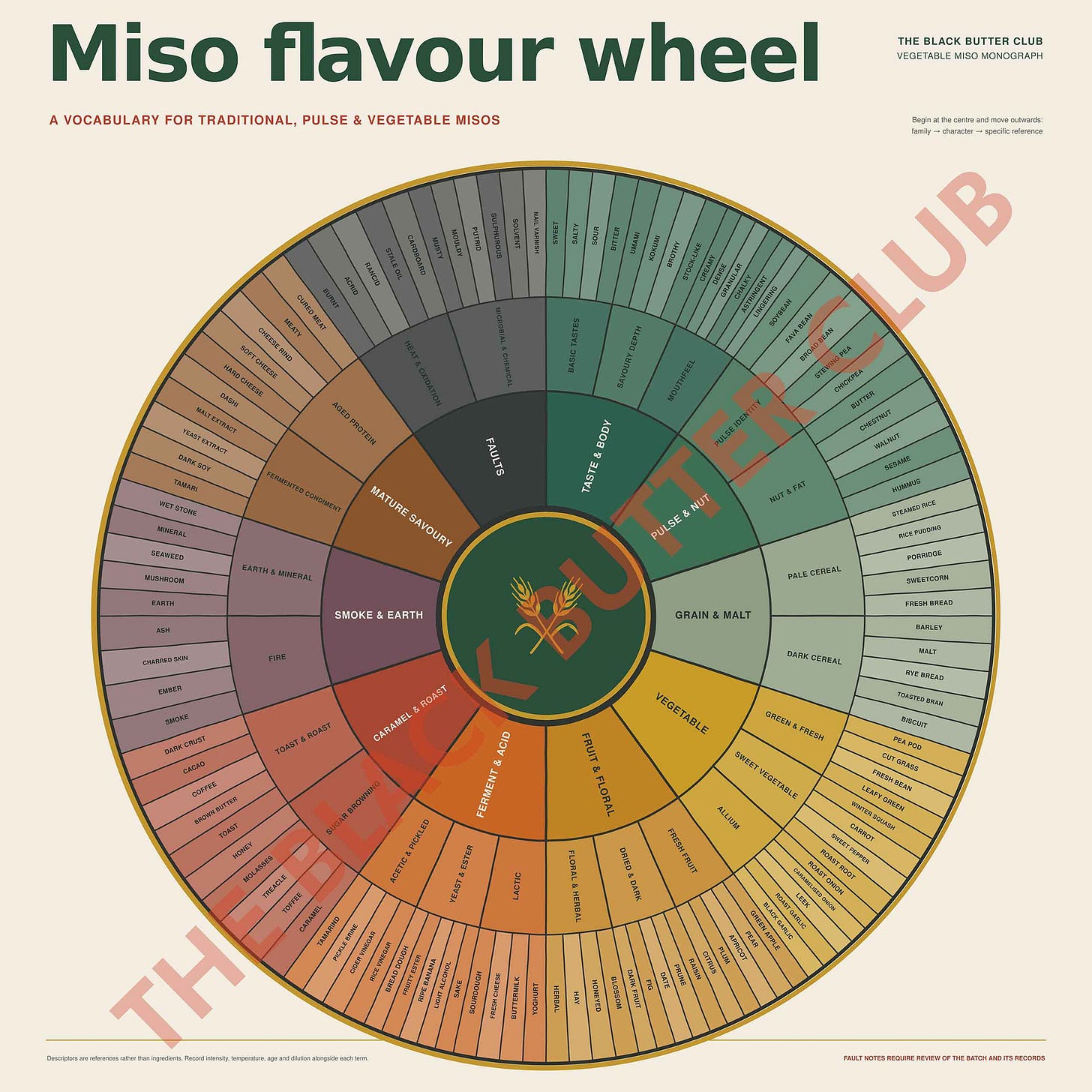
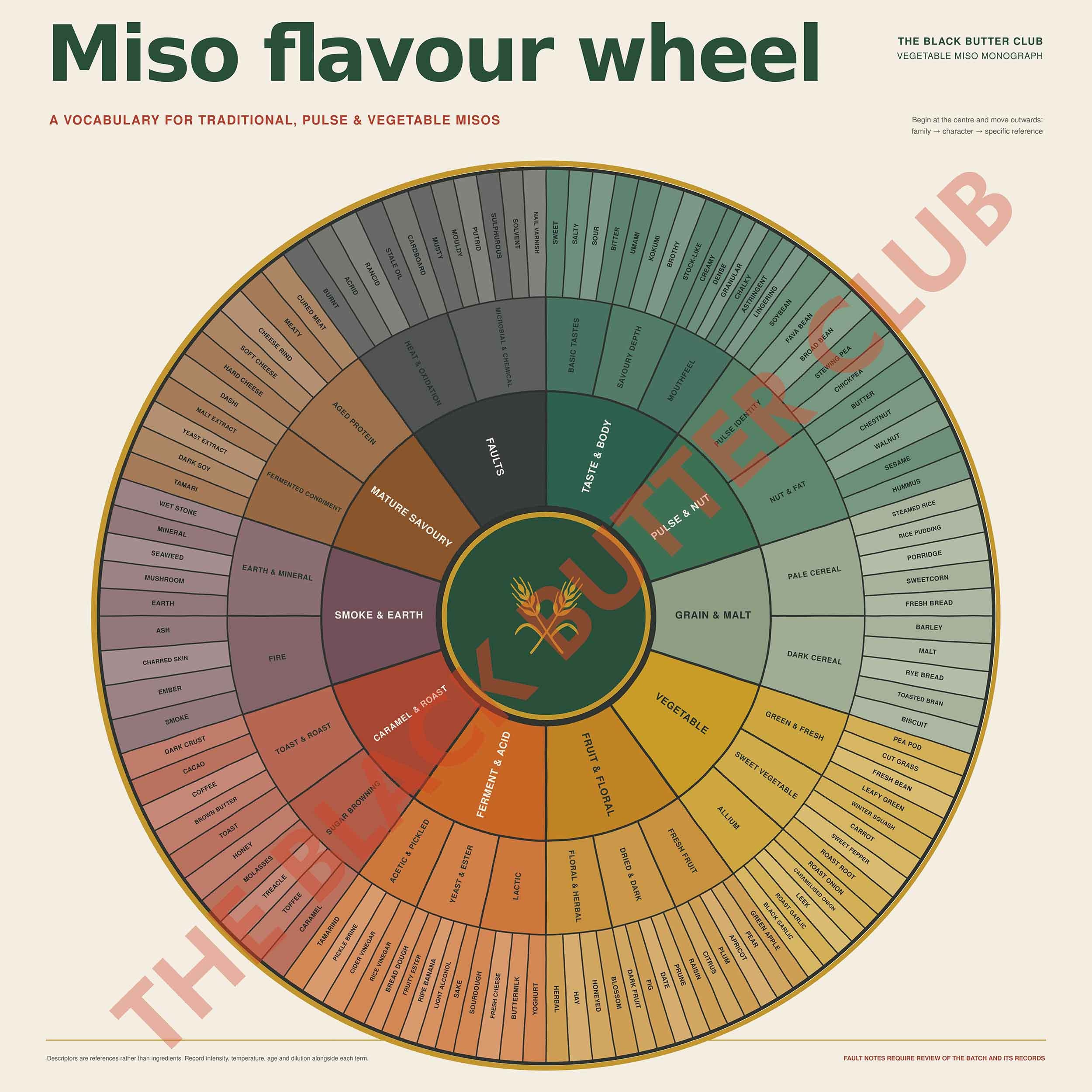
A miso flavour wheel for structured tasting
Printable labels for identifying and tracking jars
High-resolution print files
The photographs have been kept in a separate document so that anyone wishing to print the main monograph can do so without using large quantities of ink.
You can follow the master formula exactly, but I think the greater value lies in understanding how to change it. My hope is that this guide will help you build a library of misos shaped by your own ingredients, seasons and cooking preferences.
How to access the monograph
The complete collection is included at no additional cost with paid membership to The Black Butter Club.
Eligible members will find it under the new members-only Monographs tab on the main Black Butter Club website. Select the Vegetable Miso monograph, unlock it using the account connected to your membership and download either the complete collection or the individual documents.
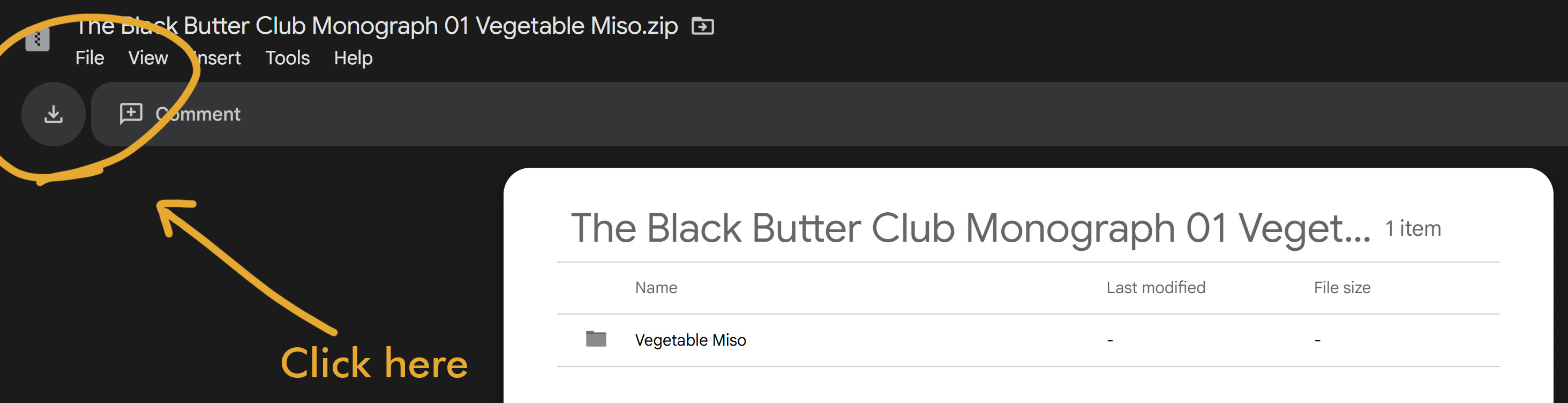
Paid membership also provides access to the usual paid Black Butter Club articles, studies, chat and archive, alongside the growing monograph library.
A thank-you to existing paid members
This kind of depth of work would not be possible without the support of paid members. Moving forward, I hope to release new monographs on specialised techniques every 3-6 months. These will always be included as part of paid-memberships, alongside preium articles published through the usual method. The only reason the monographs will be shared as seperate files and PDFs is because they drastically exceed the word limit on Substack.
Purchasing the monograph separately
I understand that some readers may want this particular guide without beginning an annual subscription.
Free subscribers and other readers can therefore purchase the complete Vegetable Miso collection through my shop as a single, one-off payment. The purchase includes the same main monograph, photographic guide, directory, flavour wheel, records, calculation card and printable materials.
There is no recurring subscription attached to the shop purchase.
The beginning of the monograph series
I wanted these monographs to occupy the space between a book, a workshop and a professional technical manual. They give me room to investigate one subject properly, including the details that are often trimmed out of recipes when edits get their hands on high wordcounts. What provides the most value (to me) are the underlying calculations, unsuccessful trials, sensory decisions, cultural context and records that all allow a technique to be truly understood.
Vegetable Miso is the first.
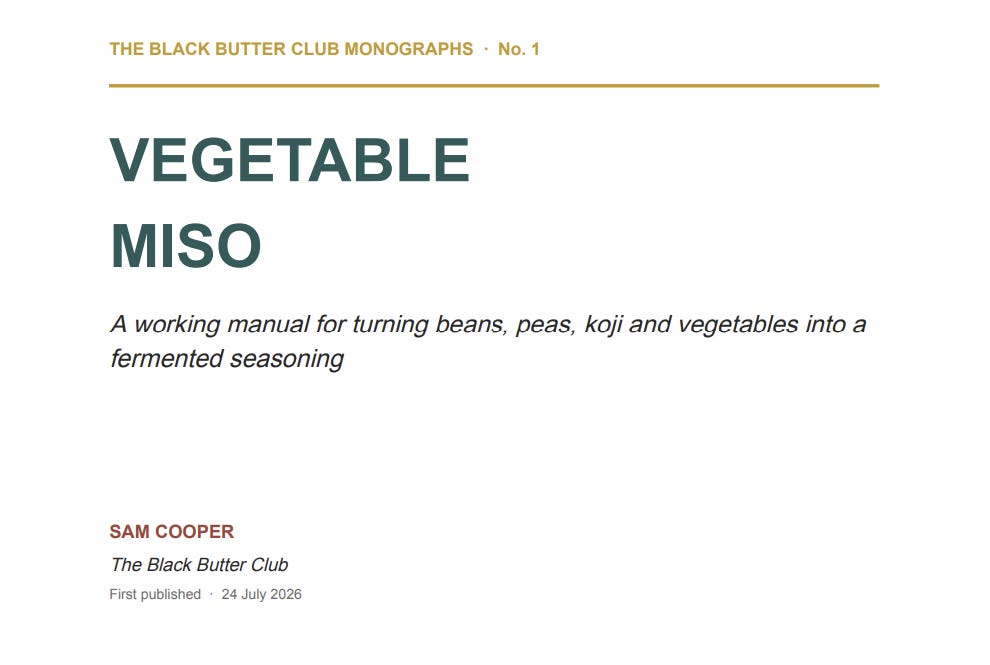
It has grown considerably beyond the guide I originally imagined, but that feels appropriate for a technique with so many possible directions. A single batch of miso made from field beans and a glut of winter squash, leads to questions of enzyme activity, moisture, microbial ecology, regional food culture, kitchen seasoning and the particular flavour of a place.
I hope this masterclass gives you the knowledge and confidence to create entirely new flavours and experiences. You might even be the first human to taste anything similar to a miso you’re yet to make, how cool is that? So print the useful pages, write on the batch records, and keep the salt card beside your scales. Label your jars, taste them at intervals and record what changes. Return to the flavour wheel when you find an aroma that you recognise but cannot put a name to.
Most of all, I hope it gives you the confidence to begin creating misos that belong to your own garden, landscape and kitchen.
Welcome to the first Black Butter Club Monograph.

With my special thanks to Haruko Uchishiba and her global koji community.
So exciting! 👏👏👏
Good morning can I ask where can I download this please ,probably very obvious but I very read through but still not finding anything. Looks so very interesting is this in the book too sam?